

How Humidity Affects Marine Diesel Engine Lubrication and Electrical Systems
-
15th September
-
Chayan
-
Marine Diesel Engine Lubrication
arine Diesel Electrical Systems
Humidity Affects Marine Diesel Engine
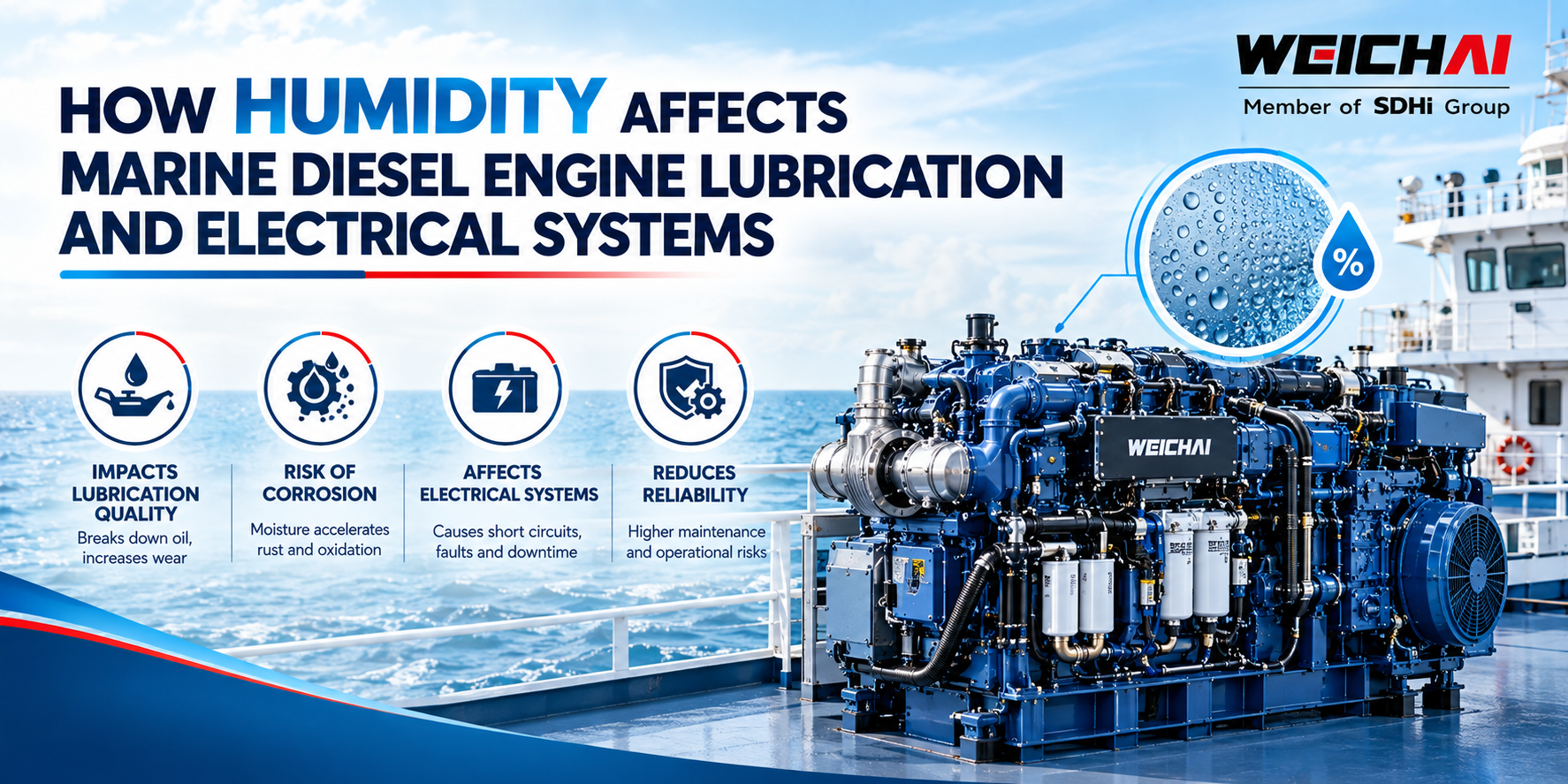
A marine diesel engine works in a wetter environment than almost anything on land. Salt spray, condensation inside the engine room, and constant humidity all reach parts of the engine that were never designed for that kind of exposure in a factory or automotive setting. Two systems take the brunt of it: the lubrication system and the electrical system. Both fail in specific, predictable ways when humidity gets past the point an engine is built to handle.
How Moisture Gets Into a Marine Diesel Engine Lubrication System
Water enters engine oil through a few common paths on a vessel. Condensation forms inside the crankcase as temperatures shift between operation and shutdown, especially overnight or during long idle periods. Humid sea air pulls moisture through breather vents. A worn seal or gasket lets water in directly, particularly around areas exposed to spray or wash-down.
Once water mixes into oil, it doesn’t stay separate for long. Diesel engine oil at operating temperature agitates constantly, and that agitation emulsifies water into the oil rather than letting it settle out. The result looks milky or cloudy rather than clear amber, an early warning sign worth checking during routine inspection.
What Water Contamination Does to a Marine Diesel Engine Lubrication System
Emulsified water breaks down the oil’s ability to do its job in a few distinct ways. It reduces the oil film’s load-bearing strength, which matters most at bearing surfaces and cylinder walls where metal-on-metal contact would otherwise cause rapid wear. It accelerates oxidation, raising the oil’s total acid number faster than normal operating hours would account for. It also promotes sludge and varnish formation, which clogs oil passages and filters over time.
Corrosion is the other major risk. Water sitting in contact with internal metal surfaces, particularly during shutdown periods when the engine isn’t circulating warm oil, creates rust on components that depend on a clean metal surface for proper sealing and lubrication.
Why Weichai Builds Marine Engines Around This Exact Problem
Weichai’s marine diesel engine range addresses lubrication contamination risk directly in its base design rather than treating it as an add-on concern. Fresh-water cooled lubrication paired with plate-type oil coolers, standard across models like the WP4, WP10, WP12, and WP13 propulsion engines, keeps oil temperature stable and reduces the condensation cycling that pulls moisture into the crankcase in the first place.
Filtration backs this up further. Spin-on and duplex oil filters catch contaminants before they circulate through bearings and cylinder walls, and a deep oil sump adds extra reserve capacity, giving the lubrication system more margin before contamination reaches a level that affects performance. Weichai states its marine engines, both commercial and fishing boat are designed to resist corrosion, humidity, and temperature fluctuations specifically for coastal and deep-sea environments, a design goal that shows up directly in these lubrication system choices.
How Humidity Affects the Electrical System Separately
Lubrication isn’t the only system humidity threatens. Marine electrical systems, starter motors, alternators, wiring connections, and control panels, sit exposed to the same moist air and salt spray as everything else on a vessel.
Corrosion at electrical contact points increases resistance, which shows up as slow cranking, intermittent starting faults, or gauge readings that drift without an actual mechanical cause. Moisture inside connector housings can create short circuits or ground faults, particularly in older wiring where insulation has started to degrade. Salt residue makes this worse, since salt holds moisture against metal surfaces longer than plain condensation would on its own.
Where Weichai’s Design Addresses Electrical Exposure
Weichai’s WP4 marine engine, as one example, runs a 24V DC starting system built for the vibration and moisture typical of marine installations, rather than an automotive-grade electrical setup adapted for sea use. Corrosion-resistant marine-grade paint, applied in five layers across the engine range, also protects mounting points and external hardware that electrical connections often route through, reducing the corrosion pathway that eventually reaches wiring and terminals.
Maintenance Practices That Reduce Humidity-Related Failures
Routine oil analysis catches water contamination before it reaches a damaging concentration, checking for cloudiness, elevated acid number, or the distinct smell contaminated oil develops. Keeping breather vents and seals in good condition limits how much moisture reaches the crankcase in the first place. On the electrical side, periodic inspection of connectors and terminals for corrosion buildup, along with proper sealing after any wash-down or spray exposure, prevents small corrosion issues from becoming starting or charging failures.
Weichai’s after-sales network supports this kind of preventive approach with genuine spare parts and trained service teams familiar with the specific demands marine installations place on lubrication and electrical components.
Frequently Asked Questions
1. How does humidity get into a marine diesel engine’s lubrication system?
Moisture enters through condensation inside the crankcase, humid air pulled through breather vents, or worn seals exposed to spray and wash-down water.
2. What does water contamination do to engine oil?
It reduces the oil’s load-bearing strength, accelerates oxidation, promotes sludge formation, and increases corrosion risk on internal metal surfaces.
3. How can water-contaminated oil be identified?
Contaminated oil often looks milky or cloudy instead of clear, and oil analysis can confirm elevated water content or an abnormal acid number.
4. Does humidity affect a marine engine’s electrical system too?
Yes. Corrosion at electrical contacts increases resistance, which can cause slow cranking, intermittent faults, or inaccurate gauge readings.
5. How does Weichai’s marine diesel engine lubrication system reduce humidity-related issues?
Fresh-water cooled lubrication, plate-type oil coolers, spin-on and duplex oil filters, and a deep oil sump work together to limit moisture buildup and filter out contaminants before they reach critical components.