

Marine Genset vs Main Propulsion Engine: Roles, Applications & Differences
-
10th September
-
Chayan
-
Differences between Marine Genset and Main Propulsion Engine
Marine Genset
Main Propulsion Engine
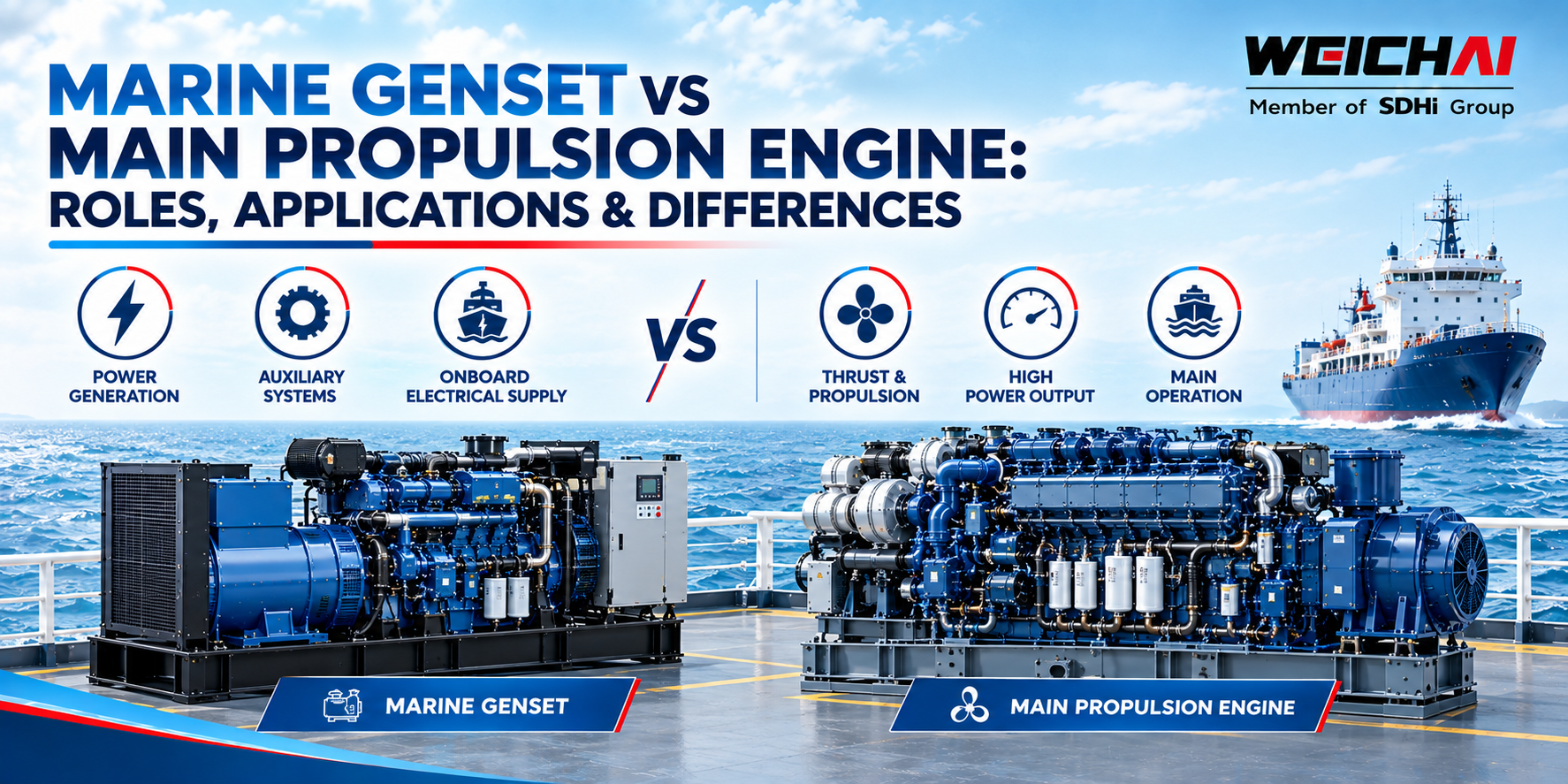
A marine propulsion engine turns the propeller and moves the vessel. A marine genset produces electricity for everything else running onboard. Both sit on the same vessel, doing entirely different jobs, and confusing the two leads to the wrong engine getting specified for the wrong purpose.
What a Marine Propulsion Engine Does
A marine propulsion engine converts fuel into mechanical power to rotate the propeller and push the vessel through water. This is the engine sized against vessel speed, load capacity, and sea conditions, not against onboard electrical demand.
Weichai’s propulsion range runs from 54 HP to 1650 HP across the full marine lineup, with the commercial category specifically covering 95 to 400 HP. These engines serve fishing boats, cargo ships, barges, ferries, naval vessels, survey launches, houseboats, tug boats, and hospital boats. Each one runs near continuous high load for long stretches, so durability under sustained output matters more here than almost anywhere else in the engine’s design.
What a Marine Genset Does
A marine genset produces electricity on a ship or offshore platform for onboard power needs, and it does this independent of the propulsion engine. Lighting, pumps, refrigeration, navigation systems, HVAC, compressors, cranes, winches, all of it draws power from the genset, not the propulsion engine.
Weichai builds genset-capable engines across several models. The WP4CD outputs 63 to 94 KVA depending on configuration. The WP12CD delivers 313 KVA. The WP13CD reaches 375 KVA. Each carries IRS/BV certification and runs on the same core engineering, individual cylinder heads with honed liners, duplex oil and fuel filtration, fresh-water cooled lubrication, that Weichai applies across its marine range.
Marine Auxiliary Engine: Where It Fits Between the Two
An auxiliary engine adds a third layer to this picture. It powers onboard systems specifically when the main propulsion engine isn’t connected to the electrical load, covering navigation systems, compressors, cranes, winches, and daily ship operations that need to keep running whether the vessel is underway or docked.
The distinction matters on paper more than it does mechanically. A genset and an auxiliary engine often overlap in function, both generate power separate from propulsion, but auxiliary engines are specifically positioned to take over electrical duties the moment propulsion isn’t carrying that load.
Marine Genset vs Main Propulsion Engine: Core Differences
The role of a marine genset is electrical generation. The role of a main propulsion engine is mechanical movement. That single distinction drives everything else that separates them.
Output gets measured differently too. Propulsion engines get rated in horsepower, tied to how much mechanical force reaches the propeller shaft. Gensets get rated in KVA, tied to electrical capacity. Load patterns differ as well. A propulsion engine typically runs at sustained high output during a voyage. A genset load fluctuates constantly, spiking when heavy equipment like winches or cranes draws power, dropping during quieter periods.
Failure consequences aren’t identical either. A propulsion engine failure strands the vessel. A genset failure knocks out lighting, refrigeration, and navigation systems, serious problems, but not necessarily ones that leave a ship unable to move.
Why Marine Gensets Need Different Engineering Than Land Gensets
A genset built for a factory floor doesn’t survive long on a ship. Marine gensets face moisture, saltwater corrosion, vibration, and unstable sea weather that land-based units never encounter. Weichai engineers its marine genset engines specifically for this environment, with corrosion-resistant marine-grade paint applied in five layers and components built to keep running through vibration and rough handling that would degrade a standard industrial genset quickly.
Engineering Features Shared Across Weichai’s Marine Range
Propulsion and genset engines at Weichai draw from the same engineering base. Individual cylinder heads with honed liners appear across both lines. Duplex oil and fuel filtration, fitted with water separators, protects against contamination in both applications. Fresh-water cooled lubrication with plate-type oil coolers keeps operating temperatures stable whether the engine is turning a propeller or spinning a generator. A deep oil sump adds extra operational margin in either role.
This shared foundation means a vessel running Weichai engines across propulsion and genset roles gets consistent reliability standards throughout, not two separate quality tiers.
Choosing the Right Engine for a Vessel
Vessel selection needs to account for two separate power requirements, not one. Propulsion sizing depends on vessel weight, speed targets, and expected sea conditions. Genset sizing depends on how much onboard electrical load the vessel actually carries, lighting, refrigeration for a fishing boat’s catch, navigation electronics, deck machinery like winches and cranes.
Undersizing either one creates problems. An undersized propulsion engine struggles against load and sea conditions. An undersized genset can’t keep pace with peak electrical demand, causing brownouts or shutdowns exactly when equipment like a crane or winch needs full power.
Frequently Asked Questions
1. What’s the main difference between a marine genset and a main propulsion engine?
A propulsion engine moves the vessel by turning the propeller. A genset generates electricity for onboard systems, separate from propulsion.
2. Does every commercial vessel need both a propulsion engine and a genset?
Most do. Propulsion handles movement, while a genset or auxiliary engine covers electrical needs like lighting, refrigeration, and navigation systems that run regardless of whether the vessel is underway.
3. How is a marine genset different from an auxiliary engine?
Both generate power outside of propulsion, but auxiliary engines are specifically built to take over electrical duty when the main propulsion engine isn’t connected to the electrical load.
4. Why can’t a standard industrial genset be used on a ship?
Marine gensets face saltwater corrosion, moisture, and vibration that industrial units aren’t built to withstand. Marine-specific engineering, including corrosion-resistant coatings, is required for reliable operation at sea.
5. What happens if a vessel’s genset fails at sea?
Onboard systems like lighting, refrigeration, and navigation lose power, which creates serious operational risk, though it doesn’t necessarily prevent the vessel from moving if the propulsion engine keeps running.
6. Are Weichai’s marine genset and propulsion engines certified?
Yes. Weichai’s marine engine range, including genset models like the WP12CD and WP13CD, carries IRS/BV certification.